
Community Photojournalism Program Makes Its Debut
Yulia Karpova
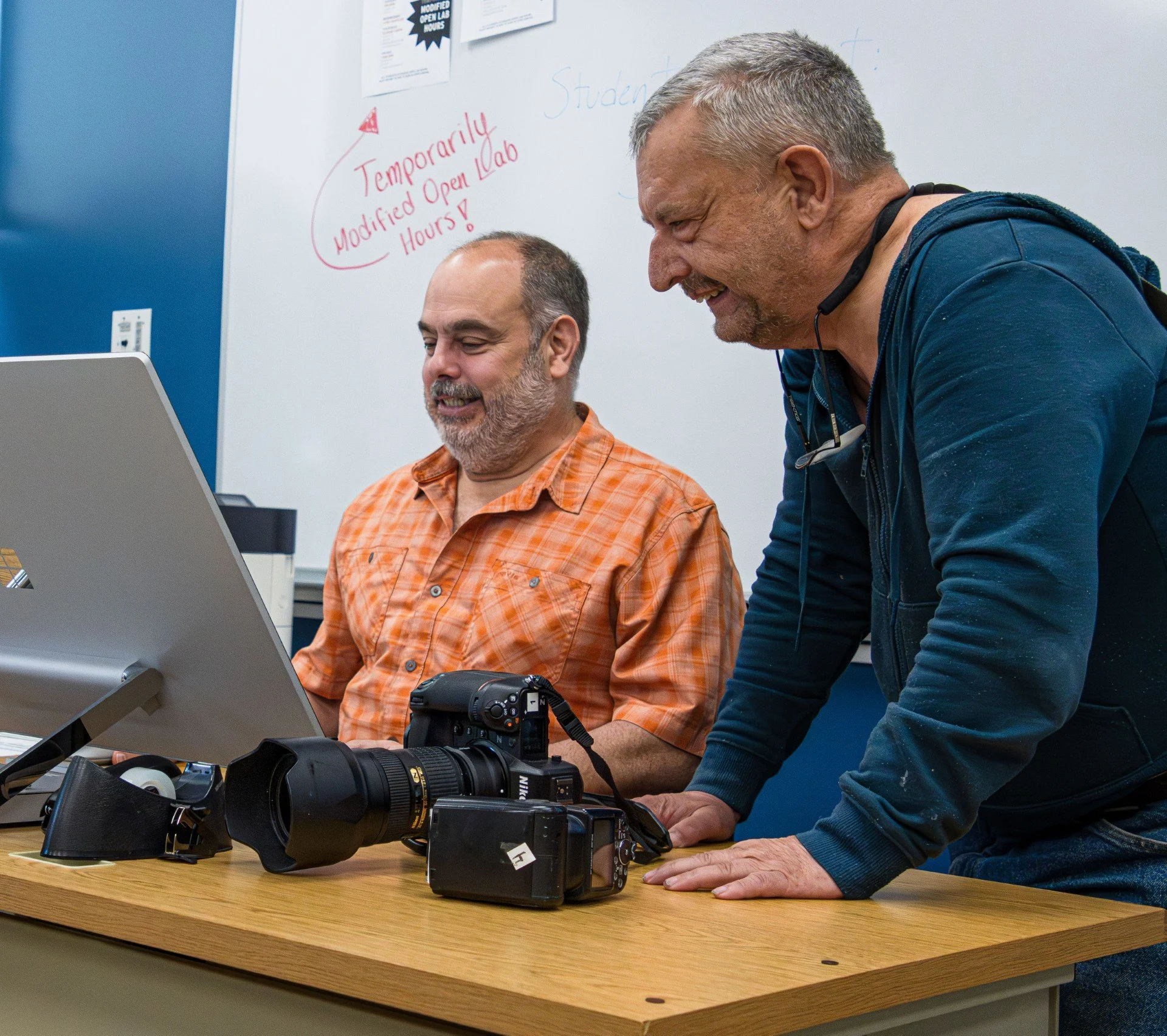
Photo by Yulia Karpova (Prof. Sorrentino with Student)
The Center for Lifelong Learning at the Sussex County Community College has captured another program following the community’s growing interest.
According to the SCCC press release from February 11: “This certificate is made possible through a grant from the New Jersey Council for the Humanities.”
Taught by Adjunct Prof. Joseph Sorrentino, the program will cover creative, technical, aesthetic and ethical basics of photojournalism, and will guide students to confidently capture photos that can help bring inspiring social change and strengthen the community. It will also connect the students with local publishers.
The students will complete several documentary/photojournalism assignments that will focus on telling their community’s stories.
Sorrentino, seasoned photojournalist and photographer for the New York Daily News, New York Post, United Press International and The Associated Press, who never planned on teaching this course, says that getting to do so “was a fluke”.
“They asked my friend, Robert Mathewson, to teach the photography class here, and they said there was also an opening for Photojournalism, and he said, I'm not qualified to teach that, but my friend is,” he said.
Faced with a herculean task to compact the entire profession into eight two-hour-long lessons, Sorrentino handcrafted the course syllabus with the main focus on teaching his students to see, to become humble observers, and let the others shine instead through the camera lens.
“I'd love to spend more time teaching everybody to use a camera,” he said. “But you can learn that from a YouTube video. When the feeling, the emotion, the idea of lighting, you can't get that as easily.”
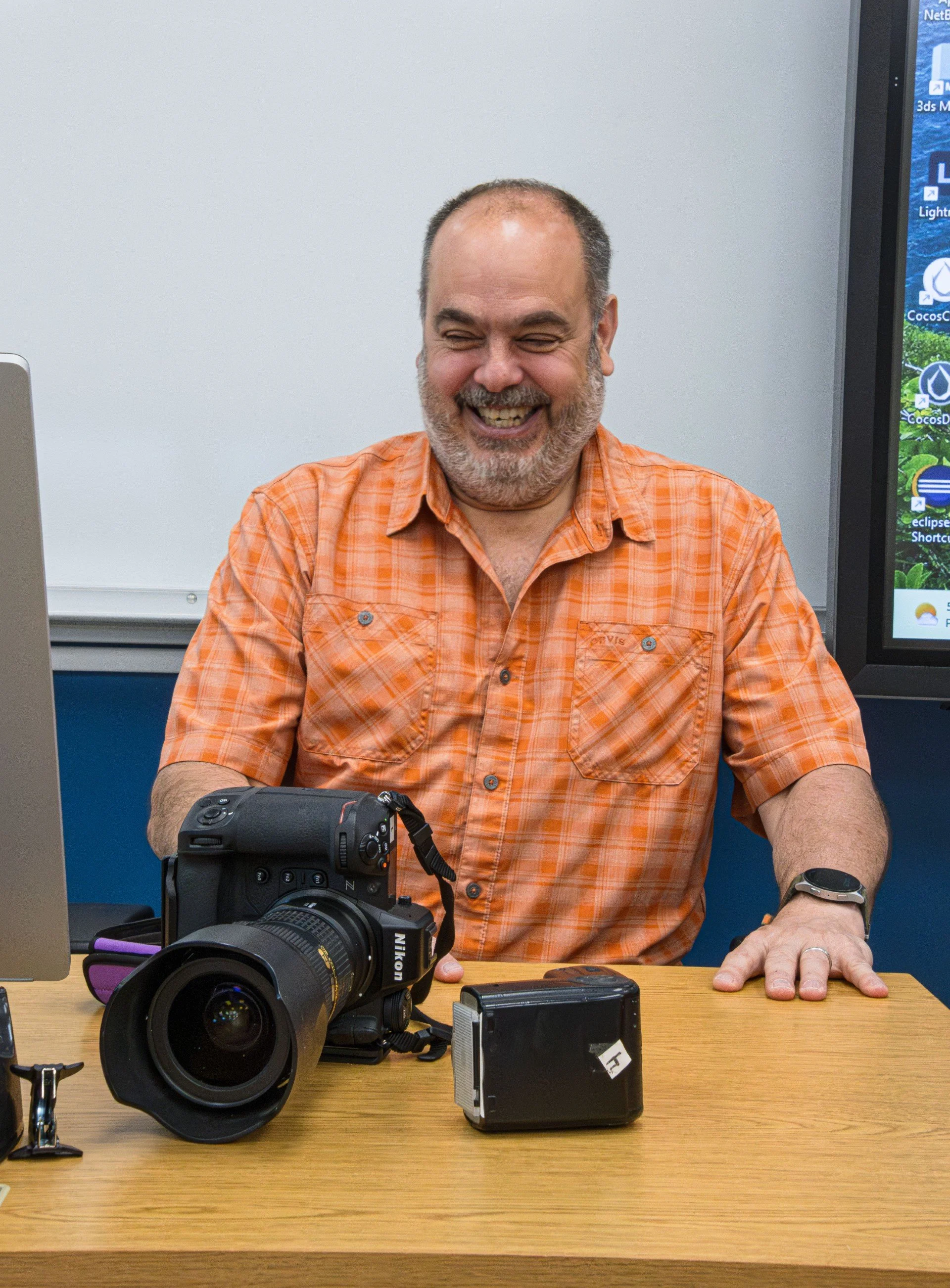
Photo by Yulia Karpova (Professor Sorrentino)
To his big surprise, while all the students have different backgrounds, experiences, equipment and skills levels, none of them is a people’s person.
“But Journalism is about people!” says Sorrentino, and this is why one of the measures of success of his course will be making students to break the boundaries of their personal comfort zones and find their own voices.
“I want everybody comfortable to walk up and say, hi, can I take your picture?” he says.
Sorrentino is very encouraged by the students’ participation during the class, and he hopes that all 14 people will finish it: participation is required to pass the course.
He also reflects that there is a big difference between teaching classes to regular students who are young and full of ambition, and the mature audience of this course in terms of taking critique.
Another challenge that Sorrentino is going to help his students overcome is that people are very subjective, and they see what they are prepared to see: “You come from a certain place, and that's what you see. Your culture, your bias.”
The biggest topic of the program is photojournalist ethics. Sorrentino explains that an image alone is just image.
“The problem is the caption,” he says. “If I take a picture of you walking across the street, it's you walking across the street, there's nothing wrong with that.
“If I say the homeless lady walks across the street, now I have a problem,” he explains.
According to him, giving an image its caption is what creates the meaning:
“You can really control how people see that.”
Number of the students have already taken multiple classes offered by the Center for Lifelong Learning and find them all a great way to have fun, keep the mind sharp or learn new skills.
Randy Trimmer, a historian with Warren County Historical Society and a Community Journalism Certification student, admits that he wanted to sign up for Sorrentino’s program but had to reconsider because of the overwhelming amount of information in his journalism class and multiple technical challenges that keep popping up along the way.
This pilot course will define the future funding of the Community Photojournalism program. SCCC Adjunct Prof. Robert Mathewson, who literally handed teaching this program to Sorrentino, says that nobody is more qualified for the job: “He’s seen it all, he’s been in the war zone. He has all the experience, and he knows what he’s doing.”
