
Feeding in Winter is Not Kind to Deer
Tracy Van Auken
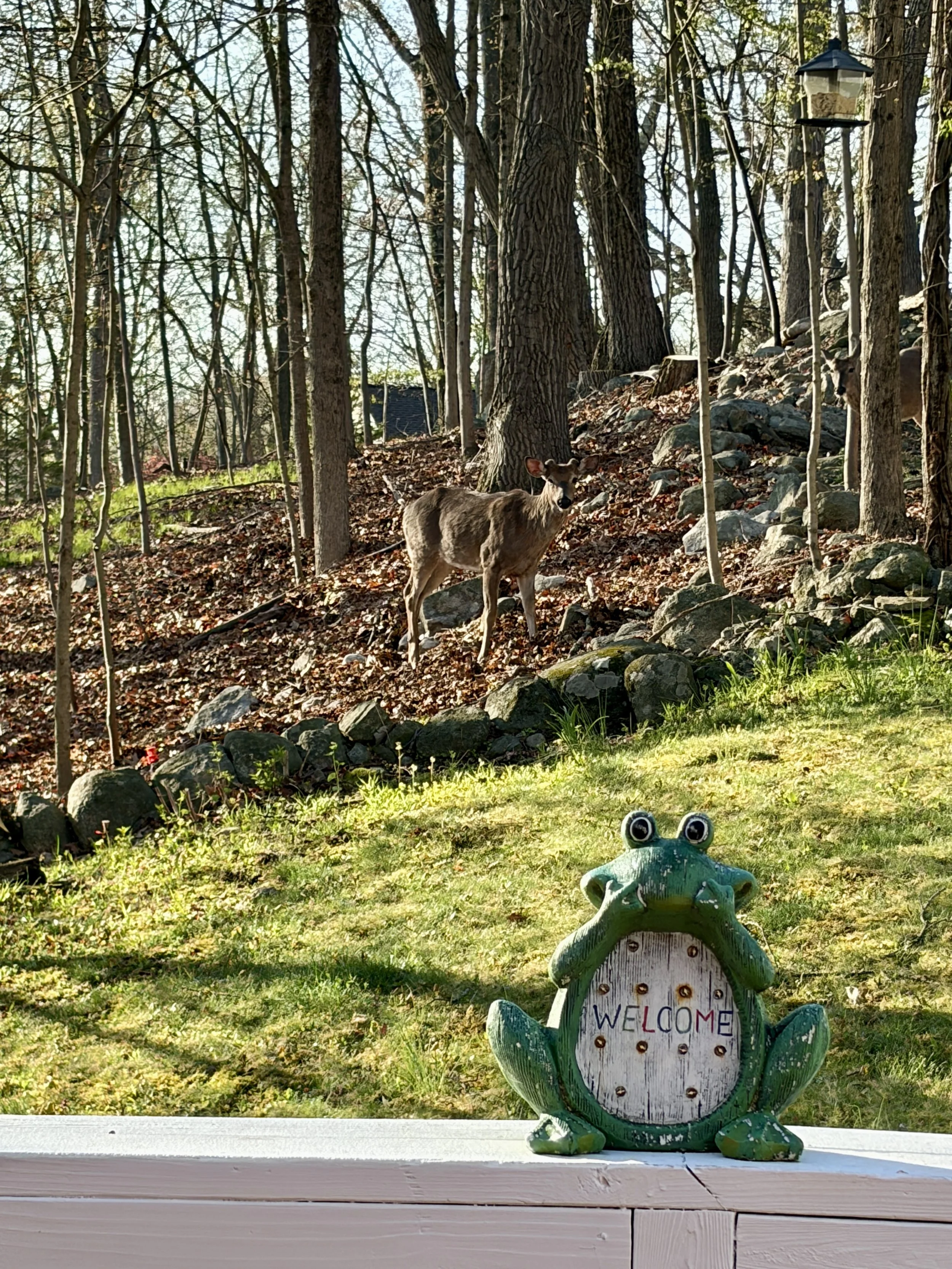
Photo by Tracy Van Auken
Every morning as I stand at my kitchen sink, I watch the little herd of deer that frequents the area of woods behind my back yard. This morning, they are happily munching and looking comfortable and plump, albeit a little shaggy from shedding their winter coats.
The picture was completely different, however, a few months ago. Deep snow lingered, and was added to, for weeks at a time. It was difficult to watch as the deer methodically pawed at the same piles of snow, revealing the same wet, brown leaves and branches as the day before. To me, they looked so discouraged and thin, and it was tempting to put out something for them to eat.
My husband, who spent much of his childhood on his grandparents’ farm, had told me that it wasn’t good for the deer to feed them, which confused me. So I decided to find out why!
According to dep.nj.gov, “feeding is defined as placing food, either natural or artificially produced, with the intent of supplementing the naturally occurring food available to deer in their normal home range.”
Some of the reasons listed as to why feeding wild deer is not a good idea include: “increasing reproductive potential, deer losing their fear of humans, and enhancing the spread of disease and parasites.”
“Feeding may cause deer to cross roadways they normally would not, increasing the potential for deer-vehicle collisions.”
The deer in my neighborhood are pretty bold. They will stare you down in your own yard or driveway, and stand defiantly in the middle of the road, also staring you down, as if to challenge which one of you is going to move first! When traffic isn’t busy, it’s comical. But when it is, it’s dangerous!
It can feel enticing and natural, even compassionate, to provide food for deer near your home during the long, cold winter months. But NJ Fish and Wildlife advises against it. Rest assured, “deer and other wildlife are wild animals and have adapted to cope to the sometimes harsh winter weather, including deep snow, cold temperatures and high winds.”
As an alternative to placing food out for the deer, the National Deer Association suggests natural, sustainable food sources. Planting dogwood, viburnum or white cedar provide deer “restaurants” that are not harmful to them.
Remembering this next winter will bring me comfort. Instead of discouragement, I will see that deer are equipped in various ways, including lowered metabolism and storage of body fat, to survive the winter and come out thriving in the spring, just like the rest of us!
